
Ever wondered what a website’s backlink profile is? Think of it as your website’s digital reputation—its complete collection of “shout-outs” from other sites across the internet. A few powerful endorsements from industry leaders will always mean more than a hundred generic mentions. This difference has significant implications for your business, directly impacting visibility, traffic, and credibility.
Understanding Your Digital Reputation
When another website links to you, it’s essentially casting a vote of confidence in your content. Search engines like Google see these links as powerful signals of credibility.
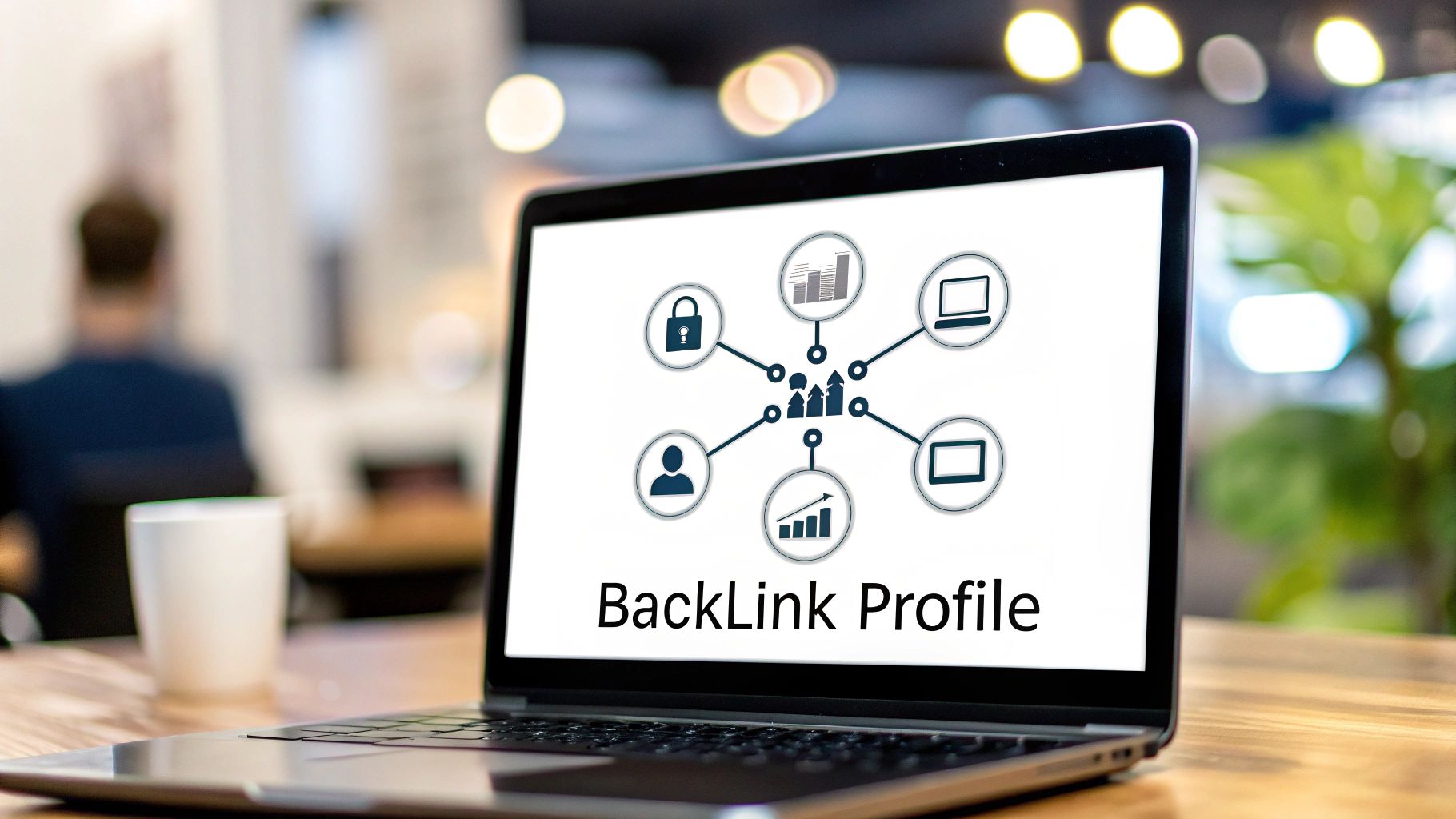
A strong, healthy backlink profile tells Google that your site is a valuable, trustworthy resource. This directly influences how high you rank in search results, making it a critical piece of the SEO puzzle. The practical implication is simple: a better profile leads to higher rankings, which means more potential customers find you.
This digital reputation isn’t just a numbers game. In fact, it’s quite the opposite. A profile with just 10 high-quality links from relevant, authoritative sites is far more powerful than one with 1,000 low-quality links from spammy or unrelated sources. That difference is everything.
Why Quality Trumps Quantity
A natural-looking backlink profile is diverse. It has links coming in from a variety of trusted sources, pointing to different pages across your site—not just your homepage. For any small business, the implications are huge.
A strong backlink profile serves as a long-term asset, continuously signaling to search engines that your website is a legitimate and valuable resource. This builds a foundation of trust that can be difficult for competitors to replicate.
For a practical example, a local bakery getting a link from a renowned food blogger’s review will see more benefit—both in SEO and actual foot traffic—than from 50 links in low-quality online directories. The benefit is clear: better rankings, more visibility, and a stronger connection with your target audience. To see how this fits into a broader strategy, check out this helpful business SEO cheat sheet.
The Five Key Components of a Backlink Profile
So, what exactly are we looking at when we analyze a backlink profile? There are five core elements that tell the story of your site’s authority and trustworthiness. Each provides actionable insights into your site’s health.
| Key Components of a Backlink Profile at a Glance | |
|---|---|
| Component | What It Measures & Actionable Insight |
| 1. Referring Domains | The number of unique websites linking to you. Actionable Insight: Focus on earning links from new, high-quality domains, not just more links from the same sites. |
| 2. Link Authority | The credibility and trustworthiness of the sites linking to you. Actionable Insight: Prioritize outreach to industry leaders and respected publications. |
| 3. Anchor Text | The clickable words used in a hyperlink. Actionable Insight: Ensure your anchor text is varied and natural to avoid spam signals. |
| 4. Follow vs. Nofollow | The type of link attribute, which tells search engines whether to pass authority or not. Actionable Insight: Aim for a natural mix, but prioritize earning “follow” links for maximum SEO impact. |
| 5. Spam Signals | Red flags that indicate manipulative or low-quality link building practices. Actionable Insight: Regularly audit your profile and disavow toxic links. |
Understanding these five pillars is the first step toward building a backlink profile that helps you instead of hurting you. Each one offers a different clue about the health of your site’s reputation in the eyes of Google.
The Anatomy of a Powerful Backlink Profile
To really get what a backlink profile is, you have to break it down into its core parts. It’s a bit like a car engine; it’s not just one big block of metal but a whole bunch of smaller systems all working together. A strong profile isn’t about collecting the most links—it’s about having the right kind of links firing on all cylinders.
Let’s pull back the curtain on the five crucial pillars that give a backlink profile its strength and, ultimately, decide how much it helps your SEO.
Referring Domains: The Foundation of Diversity
First up, we have referring domains. In simple terms, these are the unique websites that link back to you. This is where the old mantra of quality over quantity really hits home. Sure, getting 100 links from one website is nice. But getting one link each from 100 different, reputable websites? That’s exponentially more powerful in Google’s eyes.
Why is that? Because multiple independent endorsements signal a broad consensus that your site is valuable. A diverse lineup of referring domains proves your content is trusted across the web, not just by a single super-fan. This diversity is a cornerstone of a natural-looking, authoritative profile.
This isn’t just a theory; it has a real impact on how you rank. Study after study shows that pages sitting in the top 10 of Google’s search results have backlinks from dozens, sometimes hundreds, of unique referring domains. You can learn more about how domain diversity impacts your SEO results and see how going from just a few domains to over 50 can lead to huge gains in traffic.
Link Authority: The Power of Endorsement
Not all links are created equal. Think of it like a restaurant recommendation: a suggestion from your foodie friend who runs a popular food blog carries a lot more weight than one from a random person on the street.
That’s link authority in a nutshell. It’s the credibility and power of the websites linking to you. A single backlink from a major outlet like The New York Times or an industry giant like Forbes can move the needle more than a thousand links from tiny, unknown blogs.
High-authority sites have already earned Google’s trust. When they link to you, they pass a bit of that trust—often called “link equity” or “link juice”—over to your site. This powerful endorsement tells search engines that your website is also a credible, important resource.
Tools like Ahrefs and Semrush use metrics like Domain Rating (DR) or Authority Score (AS) to estimate a site’s authority, giving you a tangible way to measure the strength of the sites linking to you.
Anchor Text: The Context of the Link
Anchor text is the clickable text you see in a hyperlink. A healthy, natural-looking backlink profile has a diverse mix of anchor text types. Let’s say you run a coffee shop called “Morning Brew.” Your anchor text profile should look like a healthy mix of these:
- Branded: “Morning Brew”
- Naked URL: “www.morningbrew.com“
- Generic: “click here” or “this website”
- Topic-Related: “best espresso in town”
A natural anchor text profile is a strong trust signal. An over-optimized profile, where every single link uses the exact same keyword (e.g., “best coffee shop san diego”), looks completely unnatural and can trip Google’s spam filters.
Follow vs. Nofollow Links: The Directional Signals
Links also come with attributes that act like instructions for search engines. A “follow” link is the default type; it’s a direct vote of confidence that passes authority. A “nofollow” link, on the other hand, has a special tag that tells search engines not to pass authority through it.
While “follow” links are the heavy hitters for building SEO authority, a healthy profile always has a natural mix of both. “Nofollow” links, which you’ll often find in blog comments, forums, or on social media, don’t directly boost your authority, but they still drive real traffic and help build brand awareness. The key difference is the passing of “link equity,” but both types contribute to a natural profile.
Spam Signals: The Red Flags to Avoid
Finally, your backlink profile can pick up spam signals—toxic links from low-quality, sketchy, or manipulative websites. Think of these as bad company. Links from spammy directories, shady private blog networks (PBNs), or irrelevant foreign-language sites can actively drag your rankings down.
Keeping your profile healthy means being proactive. You have to regularly check for these toxic links and get rid of them to maintain a profile that Google trusts.
What a Strong Backlink Profile Actually Does for Your Business
It’s one thing to get the technical stuff down, but connecting the dots between backlinks and real-world business results is where the magic happens. A strong backlink profile is more than just an SEO vanity metric; it’s a powerful engine for growth. It can be the defining factor that separates a hidden gem from an industry leader everyone’s talking about.
Think of it this way: a healthy backlink profile doesn’t just give you a temporary rankings boost. It builds a solid foundation for sustainable growth that keeps paying dividends long after the links are built. Let’s break down the tangible benefits and business implications.
Benefit 1: It Puts You Higher on Google’s Leaderboard
The most direct, no-nonsense benefit of a great backlink profile is climbing the search engine rankings. Every high-quality link is like a vote of confidence telling Google, “Hey, this website knows what it’s talking about.” Time and time again, websites with stronger backlink profiles simply outperform those with weaker ones.
This isn’t just about being seen. The implication is a serious competitive advantage. When your business shows up on the first page for keywords that matter, you’re putting yourself directly in front of people who are actively looking to buy what you sell.
Benefit 2: It Drives Traffic That’s Ready to Convert
Beyond the SEO benefits, backlinks are a fantastic source of referral traffic. Picture this practical example: a local financial advisor gets a single, powerful backlink in a well-respected Kiplinger article about retirement planning. The people reading that article are already thinking about their financial future.
When they click that link, they don’t just land on the advisor’s site as random visitors. They arrive as warm, pre-qualified leads. This kind of traffic almost always converts at a higher rate because it comes with an implied stamp of approval from a source they already trust.
A strong backlink profile doesn’t just impress search engines; it brings actual, potential customers to your door. It turns your website from a passive digital brochure into an active lead-generation machine that works for you 24/7.
Benefit 3: It Makes Your Brand the Go-To Authority
Finally, a solid backlink profile is what cements your brand’s authority and credibility. When your business is consistently mentioned and linked to by respected publications, industry blogs, and even universities, you build an incredible amount of trust. This is how smaller businesses can punch way above their weight and compete with the big guys.
It positions your brand as an expert, the one people turn to for reliable information. Over time, this creates a powerful flywheel effect: more trust leads to more organic backlinks, which drives better rankings and more traffic, which further solidifies your position as a market leader.
A backlink profile isn’t just an SEO task to check off a list; it’s a long-term business asset. This comparison table drives home the difference between a healthy profile and a weak one.
Healthy vs. Weak Backlink Profile: A Key Comparison
The impact of your backlink profile shows up across several key business metrics. Here’s a side-by-side look at the outcomes.
| Metric | Healthy Profile Impact (The Benefit) | Weak Profile Impact (The Consequence) |
|---|---|---|
| SEO Rankings | Consistently high rankings for target keywords. | Poor visibility and difficulty ranking. |
| Referral Traffic | A steady stream of high-quality, engaged visitors. | Minimal to no traffic from other sites. |
| Brand Authority | Seen as a trusted leader in your industry. | Perceived as less credible or unknown. |
| Lead Generation | Attracts qualified leads ready to convert. | Struggles to generate organic leads. |
As you can see, the difference is stark. Investing in your backlink profile is a direct investment in your business’s visibility, credibility, and profitability.
How to Perform a Backlink Profile Audit
Think of a backlink audit as a much-needed health check-up for your website’s online reputation. It might sound technical, but it’s really a systematic process of inspecting every single link pointing to your site. You’re sorting them into three piles: the good, the bad, and the downright toxic. This is an actionable insight you can implement today.
It’s like spring cleaning for your SEO. You’re clearing out all the junk so the genuinely valuable endorsements can actually shine through and do their job.
The whole point is to answer a few critical questions: Are my links helping or hurting my rankings? Does my anchor text profile look natural to Google? And are there any dangerous spam signals I need to deal with right now? A regular audit is your first and best line of defense against sudden ranking drops and dreaded Google penalties.
Step 1: Choose Your Audit Tools
First things first, you need to gather your data. You can’t fix what you can’t see, so grabbing the right tools is essential for getting a complete picture of your backlink profile. The best strategy is to pull data from a couple of different sources to make sure nothing slips through the cracks.
Here are the must-have tools for the job:
- Google Search Console (GSC): This is your direct line to Google and the ultimate source of truth. GSC is completely free and shows you exactly which links the search engine has found pointing to your site. It should always be your starting point.
- Third-Party SEO Tools: To dig deeper, you’ll want a platform like Ahrefs, Semrush, or Moz. These tools provide crucial metrics like Domain Authority (DA) or Domain Rating (DR), help identify potentially toxic links, and even let you spy on your competitors’ backlink profiles. You can explore a variety of marketing tools for small businesses to find one that fits your budget.
Step 2: Analyze Referring Domains
Once you’ve exported your backlink data, it’s time to sift through it and analyze the quality of the websites linking to you. This is a huge deal. Not all links are created equal; some are powerful endorsements from industry leaders, while others are just digital dead weight. For years, the quality of these domains has been a far more important ranking factor than the sheer number of links.
For instance, one link from a major news outlet or a respected .edu site passes way more value than a dozen links from spammy, low-quality directories. It’s a common practice for savvy businesses to regularly audit and remove toxic links. In fact, companies that proactively disavow even a tiny fraction—often just 1-5%—of their most harmful links frequently see their organic performance bounce back.
This process flow shows exactly how a clean, authoritative backlink profile feeds directly into the business metrics that matter most.
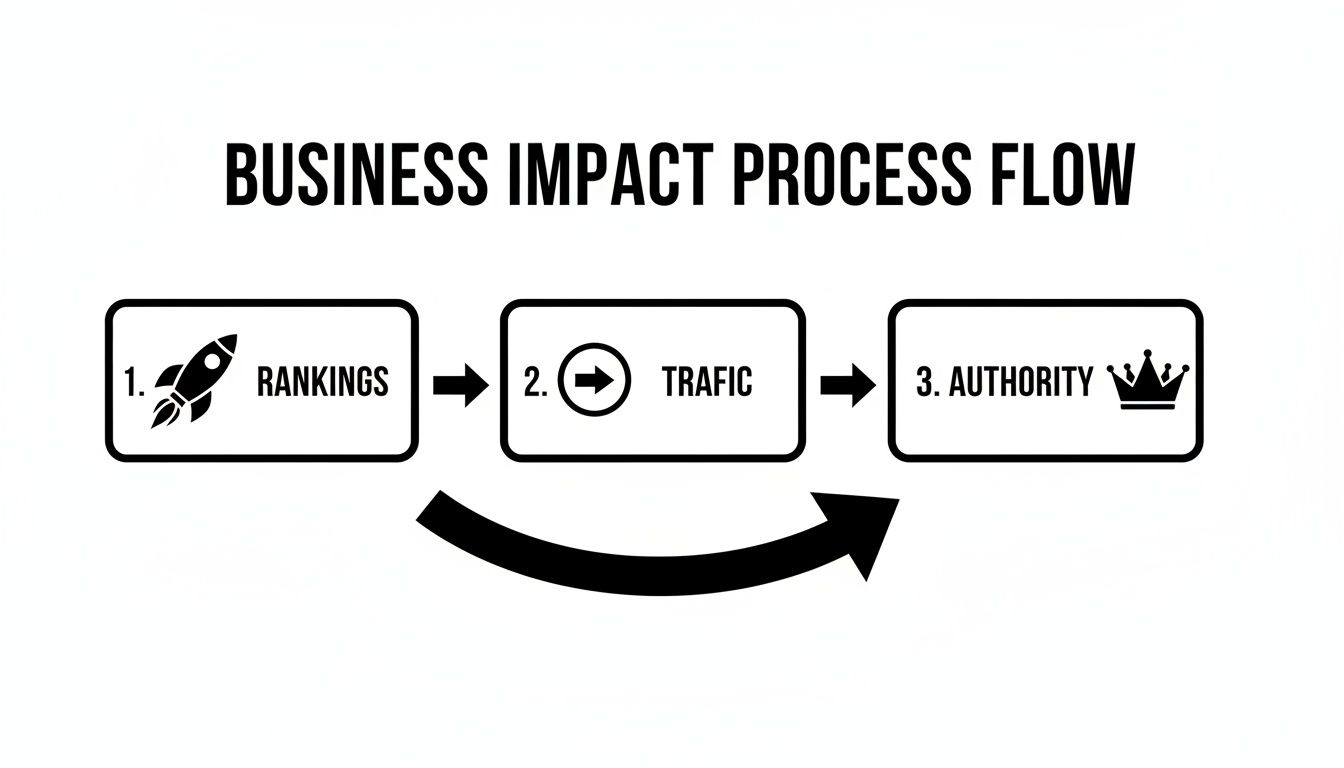
As you can see, boosting your link quality is the first domino to fall. It leads to better rankings, which drives more traffic and, ultimately, builds lasting brand authority.
Step 3: Scrutinize Your Anchor Text
Next up, take a hard look at your anchor text distribution. A natural, healthy profile will have a diverse mix of different types. You should see plenty of branded terms (“Your Company Name”), naked URLs (“yourwebsite.com”), and generic phrases (“click here” or “learn more”).
An over-optimized anchor text profile, where the vast majority of your links use the exact same commercial keyword (e.g., “best plumber in phoenix”), is a massive red flag for search engines. It screams manipulation and is a surefire way to attract a penalty.
Your audit should immediately flag any unnatural patterns. What you’re looking for is a healthy, diverse spread that suggests your links were earned organically over time, not manufactured to game the system.
Step 4: Identify and Flag Toxic Links
This is where you put on your detective hat. Finding the links that are actively hurting your site is the most critical part of the audit. These toxic links almost always come from low-quality, irrelevant, or outright spammy websites.
Here’s what to hunt for:
- Links from spammy directories or known “link farms.”
- Links from websites in foreign languages that have nothing to do with your business.
- Links built with heavily over-optimized, keyword-stuffed anchor text.
- Links from sites with a rock-bottom Domain Authority or a high spam score.
As you find these, create a simple list of the harmful URLs. This list is going to be the foundation of your cleanup plan.
Step 5: Create an Actionable Cleanup Plan
With your list of toxic links ready, it’s time to take action. Your cleanup strategy really comes down to two main approaches. This is where your audit turns into actionable steps.
- Manual Removal Outreach: Your first—and best—option is to try and get the link removed at the source. This means finding the contact information for the webmaster of the spammy site and sending a polite email asking them to remove the link. Make sure to keep a record of who you contacted and when.
- Using the Disavow Tool: If you can’t get a link removed (which happens a lot), your fallback is Google’s Disavow Tool. This tool lets you upload your list of domains or URLs and essentially tell Google, “Hey, please ignore these links when you’re evaluating my site.” Just be careful here. Use this tool with caution, because disavowing the wrong links can accidentally harm your SEO.
Actionable Strategies to Build a Healthy Profile
Alright, you’ve audited your links and cleaned up the mess. Now for the fun part: actively building a backlink profile that Google absolutely loves.
Forget about quick tricks or shady shortcuts. Sustainable, white-hat link building is all about earning genuine endorsements by creating real value. The goal is to cultivate a profile that looks completely natural because, well, it is.

This means shifting your focus to strategies that attract high-quality, relevant links over time, rather than just chasing a high number. Trust me, a slow-and-steady approach will always beat aggressive tactics that can get you penalized down the road.
Create Link-Worthy Assets
By far, the most powerful way to earn backlinks is to create something genuinely worth linking to. We call these “link-worthy assets”—high-value pieces of content that naturally draw attention and citations from other websites. This is the most actionable insight for long-term success.
Here are a few practical examples that consistently work:
- Original Research Reports: Conduct a survey or analyze some interesting data in your industry, then publish your findings. A SaaS company, for example, might release an annual “State of Remote Work” report, becoming a go-to source for tech blogs and business magazines.
- Ultimate Guides: Go deep on a core topic and create the most comprehensive, best-in-class resource available. A local contractor could write the definitive guide to “Home Renovation Permitting in Austin, TX,” earning links from homeowners, real estate agents, and even city resource pages.
- Free Tools and Calculators: Solve a common problem for your audience by building a simple, useful tool. A financial planner could offer a free retirement savings calculator that gets shared all over personal finance blogs.
Pursue Strategic Guest Blogging
Guest blogging is still a fantastic strategy—when you do it right. The key is to prioritize quality and relevance over sheer volume. Find the authoritative blogs and online publications in your niche that your target audience already knows, reads, and trusts.
The goal of guest blogging isn’t just about snagging a link. It’s about delivering real value to another site’s audience, cementing your expertise, and building meaningful relationships in your industry.
When you contribute a well-researched, insightful article, the backlink you get is simply a natural byproduct of your valuable contribution. It sends a powerful signal to search engines and can drive some great referral traffic your way. This tactic is a cornerstone of many successful small business marketing strategies.
Monitor Your Link Velocity
Here’s a crucial piece of the puzzle that often gets overlooked: your link velocity. This is simply the speed at which you acquire new links.
Search engines pay close attention to this. A profile that grows gradually and steadily looks natural and earned. In contrast, a sudden, massive spike in new referring domains looks spammy and might trigger an algorithmic filter. A practical insight here is to keep an eye on your monthly link acquisition rate and compare it to your history and competitors to ensure your growth looks authentic.
Got Questions About Backlink Profiles?
Even with a solid game plan, a few questions always seem to surface when you’re digging into backlinks. It’s completely normal. Let’s tackle some of the most common ones I hear from business owners to make sure you stay on the right track.
How Many Backlinks Do I Actually Need to Rank?
This is, without a doubt, the number one question. But it’s also the wrong question to ask. There’s no magic number that unlocks the top spot on Google. The real focus should always be on quality, relevance, and authority.
A website can climb the rankings with just a handful of powerful links from highly trusted domains in its niche. On the flip side, a site with thousands of junky, irrelevant links will go absolutely nowhere.
Think of it like getting a job reference. One glowing recommendation from a respected industry leader is worth a hundred generic shout-outs from people who barely know you.
The question isn’t “how many?” It’s “from who?” A profile with 10 high-authority links from relevant websites will almost always crush a profile with 100 low-quality links.
Is It Safe to Buy Backlinks?
Let me be direct: no. Buying backlinks is a clear violation of Google’s guidelines and a shortcut straight to trouble. Search engines see this as a blatant attempt to manipulate their rankings, and they’ve gotten incredibly good at sniffing out these schemes.
Any short-term bump you might see isn’t worth the risk. The implications of getting caught can be severe, including a manual action from Google that can literally wipe your site from the search results. Coming back from that is a long, painful, and expensive process.
Authentic, earned links are the only way to build sustainable, long-term SEO success. Period.
How Long Does It Take to Improve My Backlink Profile?
Building a strong, natural backlink profile is a marathon, not a sprint. You won’t see dramatic changes overnight. The real work—creating amazing content, building relationships, and earning genuine links—takes consistent effort over several months, if not longer.
As a general rule, you might start to feel the positive effects of new, high-quality backlinks on your rankings within 1 to 3 months. But building a truly authoritative profile isn’t a one-and-done project; it’s an ongoing strategy that should be woven into everything you do online.
Patience and consistency are your two best friends here.
Ready to build a website with an SEO foundation that attracts the right kind of attention? The team at Small Business Website Design creates clean, modern sites optimized to earn trust and drive growth. Start your project today!