
In the competitive digital landscape of 2026, a professional website has become an essential investment rather than an optional expense for small businesses. Understanding the Small Business Website Design Cost landscape helps entrepreneurs make informed decisions that balance budget constraints with the need for an effective online presence. Whether you are launching a new venture or upgrading an existing site, knowing what to expect financially prepares you for this crucial business investment.
The good news is that website development has become more accessible than ever before, with options ranging from user friendly DIY platforms to specialized agencies. The challenge lies in determining which approach offers the best value for your specific business needs and goals.
In this comprehensive guide, we will break down everything small business owners need to know about website costs in 2026, from initial development to ongoing maintenance. By examining different approaches, comparing pricing structures, and highlighting key considerations, you will gain clarity on how to maximize your website investment.
Small Business Website Design
The Evolution of Website Design
The small business website landscape has transformed dramatically over the past decade. Back in 2016, having a basic online brochure was often sufficient. Fast forward to 2026, and websites have evolved into sophisticated digital ecosystems that drive business growth through multiple channels.
According to recent industry research, approximately 78% of consumers now judge a company’s credibility based primarily on its website design, up from 65% in 2020. This shift underscores how critical professional web design has become for establishing trust with potential customers.
Current Design Trends Affecting Costs
Several design trends have emerged by 2026 that directly impact small business website costs:
- AI Powered Personalization: Websites increasingly incorporate artificial intelligence to deliver customized user experiences, typically adding $600-2,000 to development costs but significantly increasing conversion rates.
- Immersive Experiences: Interactive elements, micro animations, and engaging visual storytelling have become standard practices, requiring more sophisticated design expertise.
- Voice Search Optimization: With voice search accounting for nearly 55% of all searches in 2026, optimizing websites for voice commands has become necessary rather than optional.
- Sustainability Features: Eco conscious consumers increasingly prefer websites with low carbon footprints, leading to new development approaches that prioritize efficient code and green hosting solutions.
GruffyGoat’s 2025 industry analysis reveals that “the technical complexity of small business websites has increased by approximately 35% since 2020, with corresponding impacts on development timelines and budgets.”
Core Components of Modern Website Design
Today’s effective small business websites combine several essential elements:
- Strategic User Experience (UX): Intuitive navigation and thoughtful customer journeys designed to guide visitors toward specific actions
- Responsive Design: Seamless functionality across all devices, particularly critical as mobile browsing continues to dominate
- Brand Consistency: Visual elements and messaging aligned with your overall brand identity
- Performance Optimization: Fast loading times and smooth functionality, which directly impact both user satisfaction and search rankings
- Conversion Elements: Strategically placed calls to action and lead capture mechanisms that transform visitors into customers
Website Design Services for Small Business
Service Tiers Explained
Website design services for small businesses typically fall into several distinct tiers in 2026, each offering different levels of customization and support:
Basic Services
These entry level packages typically include:
- Standard templates with minor customizations
- Limited pages (typically 5-8)
- Basic contact forms
- Simple responsive design
- Minimal SEO setup
Standard Services
Mid tier offerings usually feature:
- Semi custom design
- 8-15 pages
- Blog functionality
- Contact forms with automation
- Social media integration
- Basic SEO package
- Simple analytics setup
Premium Services
Top tier services generally provide:
- Fully custom design
- Unlimited pages
- Advanced functionality (memberships, bookings, etc.)
- E commerce capabilities
- Comprehensive SEO strategy
- Conversion optimization
- Analytics dashboard
- Training sessions
According to WebYKing’s 2025 industry analysis, approximately 65% of small businesses opt for standard service packages, finding they offer the best balance of professionalism and affordability.
What to Expect From Professional Services
When investing in professional website design services in 2026, you should expect a structured approach that includes:
- Discovery Process: A thorough analysis of your business goals, target audience, and competitive landscape
- Strategic Planning: Development of a website structure that supports your business objectives
- Design Mockups: Visual previews of your website before development begins
- Development Timeline: A clear schedule with milestones and deliverables
- Testing Phases: Comprehensive testing across devices and browsers
- Launch Support: Technical assistance during the website launch
- Post Launch Guidance: Training or documentation for managing your new website
The Web Factory emphasizes that “the most successful client designer relationships in 2026 begin with a collaborative discovery process that aligns expectations and establishes clear communication channels.”
Evaluating Service Provider Quality
With numerous providers claiming to offer the best website design services, here are key factors to consider when evaluating quality:
- Portfolio Diversity: Look for experience in your industry but also versatility across sectors
- Case Studies: Detailed examples showing not just design work but measurable business results
- Technical Expertise: Familiarity with current technologies and best practices
- Communication Process: Clear, responsive communication during initial interactions
- Testimonials and Reviews: Feedback from previous clients, particularly regarding timeline adherence and budget management
- Ongoing Support Options: Available maintenance packages and response times for issues
Breaking Down Small Business Website Costs in 2026
Cost Factors Explained
When budgeting for a website in 2026, several components contribute to the overall investment:
One Time Costs
- Website Design: The visual appearance and user interface
- Development: The technical building of the website
- Content Creation: Professional writing and media production
- Initial SEO Setup: Foundational search engine optimization
Recurring Costs
- Domain Name: Your web address ($15-35/year)
- Hosting: Server space where your website lives ($8-250/month)
- Maintenance: Regular updates and technical support
- Security: Protection against cyber threats
- Content Updates: Regular refreshes to keep content relevant
- Marketing Integration: Tools that connect your website to broader marketing efforts
Price Ranges by Development Approach
The approach you choose will significantly impact your budget. Here is a breakdown of typical cost ranges in 2026:
DIY Website Builders
- Monthly Subscription: $25-65
- Premium Templates: $0-300 (one time)
- Additional Plugins/Extensions: $10-60 each monthly
- Total First Year Cost: $350-1,500 (plus your time investment)
According to GoDaddy’s Small Business Digital Report, DIY website builders remain popular among solopreneurs and micro businesses, with approximately 40% of businesses with fewer than five employees choosing this route.
Small Business Website Freelance Developers
- Basic 5-Page Website: $2,000-5,500
- Business Website with Blog: $4,000-9,000
- E commerce Functionality: Additional $2,500-7,000
- Total Project Cost: $2,000-16,000 (depending on complexity)
The Business Trends Report notes that freelance web development rates have increased by about 18% since 2023, reflecting growing demand and increased technical requirements.
Small Business Website Design Agencies
- Basic Professional Website: $6,000-12,000
- Growth Focused Business Site: $12,000-25,000
- Custom E commerce Solution: $18,000-35,000
- Strategy & Consulting: Often included, valued at $2,500-6,000
Enterprise Agencies
- Custom Business Solutions: $35,000-120,000+
- Complex E commerce Platforms: $60,000-300,000+
- Full Digital Transformation: $120,000-500,000+
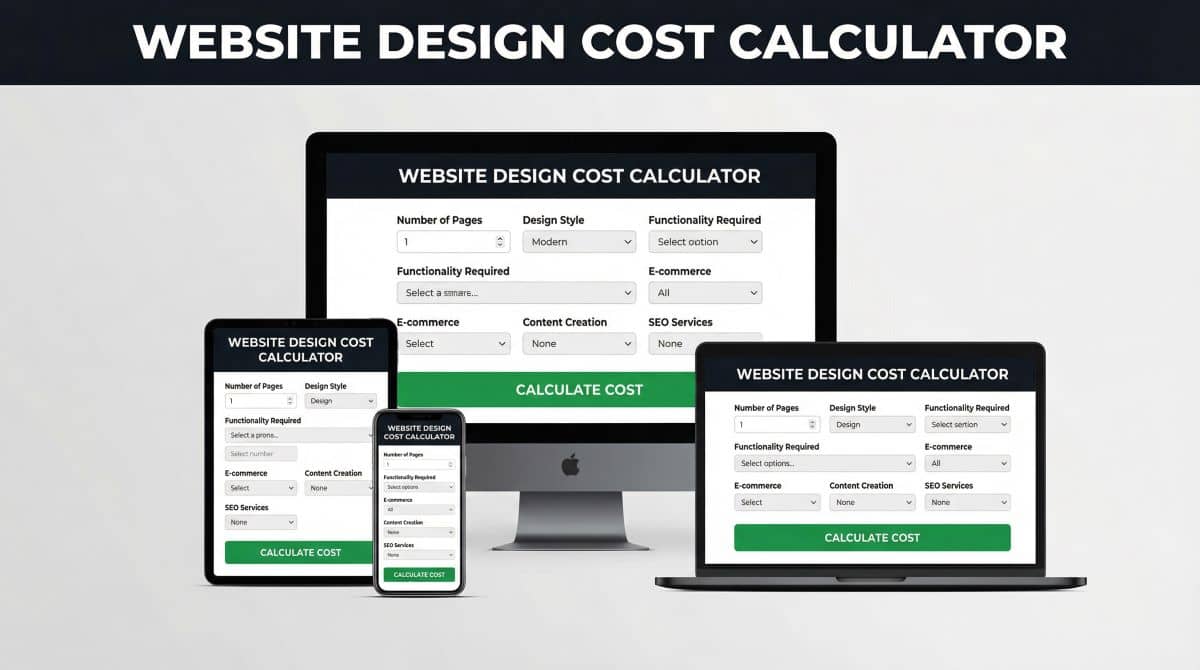
These ranges reflect the current market as of 2026, but regional variations can significantly impact pricing. Working with developers in major tech hubs typically commands a premium compared to professionals in smaller markets. Try our free website design cost calculator.
Hidden Costs to Consider
Beyond the obvious expenses, several hidden costs often surprise small business owners:
- Revision Cycles: Most quotes include a limited number of revision rounds. Additional changes typically incur extra charges.
- Training: Learning to manage your website can require significant time investment or additional training costs.
- Integration Complexity: Connecting your website to CRM systems, payment processors, or marketing tools often requires additional development work.
- Performance Optimization: Ensuring your website loads quickly and performs well on all devices might require specialized technical work.
- Accessibility Compliance: Meeting the latest accessibility standards (which became more stringent in 2025) often requires dedicated development attention.
OuterBox Design points out that “the most common budget overruns occur when clients underestimate the complexity of integrations or the number of revision cycles needed.”
Small Business Website Packages
Common Package Structures
In 2026, small business website design packages have become more standardized yet flexible to accommodate diverse small business needs. Most providers structure their offerings around these common package types:
Starter Packages
- 4-6 page website
- Template based design with customization
- Mobile responsive
- Basic SEO setup
- Contact form
- Social media links
- Average Investment: $2,500-5,000
Business Growth Packages
- 7-15 page website
- Semi custom design
- Blog functionality
- Lead generation forms
- Email marketing integration
- Basic analytics dashboard
- Content management system
- Average Investment: $4,500-10,000
E commerce Packages
- Product catalog (up to 100 items)
- Shopping cart and payment processing
- Inventory management
- Customer account creation
- Order tracking
- Product reviews
- Basic shipping integration
- Average Investment: $8,000-18,000
Premium Business Packages
- Fully custom design
- Advanced functionality
- Comprehensive SEO strategy
- CRM integration
- Marketing automation
- Analytics with reporting
- User experience optimization
- Average Investment: $15,000-30,000
Comparative Analysis of Website Packages
To help visualize the differences between these packages, here is a comparison of what is typically included:
| Feature | Starter Package | Business Growth | E-commerce | Premium Business |
|---|---|---|---|---|
| Pages | 4-6 | 7-15 | 10-20 | Unlimited |
| Design | Template-based | Semi-custom | Semi-custom | Fully custom |
| Mobile Optimization | Basic | Advanced | Advanced | Comprehensive |
| SEO Setup | Basic | Intermediate | Intermediate | Advanced |
| Content Creation | Limited | Partial | Partial | Comprehensive |
| Maintenance | Not included | Basic (3-6 months) | 6-12 months | 12+ months |
| Support | Email only | Email & phone | Priority support | Dedicated manager |
| Analytics | Basic | Intermediate | E-commerce tracking | Custom dashboard |
| Approx. Cost (2026) | $2,500-4,500 | $4,500-10,000 | $8,000-18,000 | $15,000-30,000 |
This comparison illustrates how packages scale in both features and investment. According to Easify Technologies’ cost guide, “The most significant price jumps occur when moving from template based to custom design, and when adding specialized functionality like e commerce or membership systems.”
Choosing the Right Package
Selecting the appropriate website package depends on several factors:
- Business Goals: Are you primarily building brand awareness, generating leads, or selling products online?
- Growth Trajectory: Will your current needs change significantly within the next 1-2 years?
- Content Volume: How much information do you need to present to your audience?
- Technical Requirements: Do you need specific functionalities or integrations?
- Management Capabilities: Who will maintain the website after launch, and what are their technical skills?
The Business.com Digital Transformation Report suggests that “small businesses often benefit from starting with a slightly more robust package than they currently need, as this reduces the likelihood of a complete rebuild within 2-3 years.”
Website Designers for Small Businesses
Finding the Right Design Partner
The relationship with your website designer or development team can make or break your project. Here is how to find the right match for your small business in 2026:
Where to Look
- Specialized Directories: Platforms like Clutch and DesignRush have become more sophisticated in 2026, offering detailed filtering and verification
- Industry Networks: Many industry associations now maintain curated lists of web designers who specialize in specific sectors
- Local Business Groups: Chamber of Commerce and business networking groups often connect members with trusted local designers
- Portfolio Platforms: Behance and Dribbble remain valuable for assessing design quality and style compatibility
Vetting Potential Designers
When evaluating potential website designers, consider these approaches:
- Review Work History: Look beyond aesthetics to understand the strategic thinking behind their designs
- Assess Technical Knowledge: In 2026, designers should be conversant with current technologies like Progressive Web Apps, AR elements, and accessibility compliance
- Check Client Retention: Designers who maintain long term relationships with clients typically deliver better results and value
- Evaluate Communication Style: Initial interactions often reflect how the entire project will proceed
According to Shopify’s Partner Analysis, “The most successful small business websites come from partnerships where client and designer establish clear communication channels and feedback mechanisms from day one.”
If you need help with your small business website design please visit SmallBusinessWebsite.net